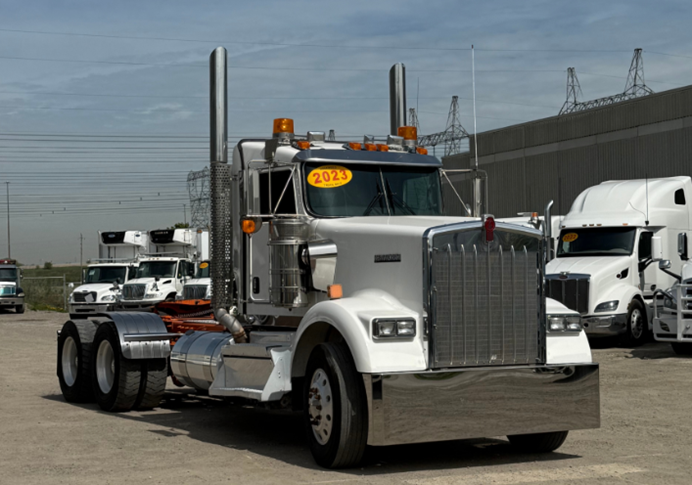
Buying a classic long-hood truck is exciting. It is also a little risky. The Kenworth w900b has a reputation for style, power, and presence. But if you buy the wrong one, you can end up with a money pit that eats your weekends and your wallet. This guide is written for real buyers, not daydreamers. If you are shopping for Toronto used trucks, and you want to do it the smart way, keep reading.
Why People Still Chase This Truck
Let’s be honest. Most trucks do a job. This one does a job and looks like it owns the highway. People love it for the long hood, the stance, and the old-school feel. It has personality. And for owner-operators, that matters. A truck can be a tool, but it can also be your rolling brand.
That said, nostalgia can mess with your judgment. A clean-looking truck can still hide expensive problems. So we’re going to treat this like a business decision, not a love story.
Know Your Real Goal Before You Shop
Before you look at a single listing, ask yourself one simple question:
“What am I actually buying this truck for?”
Because the right truck for weekend shows is not the right truck for daily hauling.
Here are the three most common buyer types:
- Working owner-operator: needs reliability and lower downtime
- Collector or hobby buyer: wants originality and clean cosmetics
- Project buyer: wants a base to rebuild and customize
If you don’t pick your lane early, you will get distracted by shiny paint and chrome stacks. And yes, we’ve seen it happen.
The 10-Minute Walkaround That Saves You Thousands
You don’t need to be a mechanic to spot trouble. You just need a routine. Start with a slow walk around the truck. Don’t rush. Don’t talk. Just look.
Focus on:
- Frame rails for rust scaling, cracks, or repairs
- Cab corners and sleeper edges for rot
- Door alignment (sagging can hint at cab structure issues)
- Oil leaks under the engine and transmission
- Tires for uneven wear patterns
- Fifth wheel and mounts for wear or welding
A good seller will let you take your time. A pushy seller is basically waving a red flag.
The Paperwork Most Buyers Forget
Here’s where many regrets begin. Most people check the ownership. They check the mileage. Then they stop. But if you want fewer surprises, you need to look deeper.
Ask for:
- Service records (even partial ones are useful)
- Maintenance logs for oil changes and major repairs
- Any invoices for engine work, clutch, or suspension
- Emissions compliance paperwork (if applicable)
- Safety inspection history
If the seller says, “I don’t have any paperwork, but it runs great,” treat that like a warning.
A truck can run great today and still be one week away from a $12,000 repair.
Engine, Transmission, and Axles: What Actually Matters
This is where buyers often overthink things. Yes, the engine matters. But condition matters more than brand names. A well-maintained older engine can outperform a neglected “better” one.
When you’re checking the powertrain, focus on:
- Blow-by level (a quick check can reveal wear)
- Oil condition and coolant condition
- Any smoke at startup or under load
- Transmission shifting smoothness
- Differential noise
- Evidence of leaks around seals and gaskets
If you are not comfortable judging this yourself, bring a heavy truck mechanic for a pre-purchase inspection. That fee is tiny compared to the cost of guessing wrong.
The Test Drive Checklist (No Guessing)
This part matters more than the photos. And it matters more than what the seller says. During the test drive, pay attention to how the truck behaves under stress. Also, this is where buyers in Toronto used trucks markets can get caught. A lot of trucks look fine in a lot. They fall apart when you drive them.
On the road, check:
- Does it pull straight or drift?
- Does the steering feel tight or loose?
- Do the brakes feel smooth or grabby?
- Any vibration at highway speed?
- Any hesitation under acceleration?
- Any warning lights that “just came on”?
And yes, that last one happens more than you’d think.
If you can, drive it in traffic, on the highway, and on a rougher road. You want to hear the truth.
Quick Buyer Checklist (The One You’ll Actually Use)
The “No-Regrets” Checklist
- Check for frame rust and signs of repairs
- Confirm service records and repair invoices
- Verify mileage and compare to wear on pedals and seat
- Inspect tires for uneven wear
- Look for oil and coolant leaks
- Test every electrical feature (lights, windows, gauges)
- Drive it long enough to reach full operating temperature
- Get a professional inspection before final payment
One good checklist beats 20 random tips. Every time.
Common Regrets and How to Avoid Them
Let’s talk about the regrets people don’t admit until later.
Regret #1: “I bought it because it looked clean.”
Paint is not proof. Chrome is not proof. Clean interiors are not proof.
Condition is proof.
Regret #2: “I didn’t budget for the first 90 days.”
Even a solid used truck often needs baseline work.
Plan for:
- Fluids and filters
- Tires
- Small air leaks
- Brake adjustments
- Minor wiring fixes
Regret #3: “I trusted the seller too much.”
Not every seller is dishonest. But not every seller knows the full story either.
Trust, but verify.
Regret #4: “I didn’t check where it lived.”
A truck from a heavy salt region can have hidden corrosion. A truck from a dry region might be cleaner underneath.
Ask where it ran. Ask where it was parked.
Regret #5: “I rushed because I was afraid someone else would buy it.”
That’s how people buy bad trucks fast.
A good deal is not a good deal if it becomes a problem.
Final Remarks
If you’ve made it this far, you’re already ahead of most buyers. At Rockwood Truck Centre, we see the difference between a truck that’s ready for work and a truck that’s ready for repairs. We also know what buyers care about in the real world, not just on paper.
When you shop with us, we focus on the basics that actually protect you: honest details, real guidance, and a buying process that doesn’t feel like a trap. If you want help choosing the right used truck for your work, your routes, and your budget, we’re here for that. No pressure. Just straight answers.
Because the goal is not just to buy a truck. The goal is to buy one you will still be happy with six months from now.
FAQs
Look underneath. Fresh paint on the cab means nothing if the frame, crossmembers, and suspension are crusty. Also check for brand-new interior parts paired with old worn pedals. That mismatch is a big clue.
Compare wear points. Steering wheel texture, pedal wear, shifter knob condition, and seat cushion sag tell a story. If those look heavily worn but the mileage is “low,” something does not add up.
Electrical gremlins. Bad grounds, hacked wiring, and weak alternators can cause random shutdowns, sensor faults, and no-start situations. They are frustrating, time-consuming, and often misdiagnosed.
Cooling system health, drivetrain condition, and maintenance history. A truck that runs cool and shifts clean will make you money. A shiny truck with overheating issues will ruin your schedule.
Ask questions, not accusations. Say, “Can we review the service history?” or “Would you be open to a pre-purchase inspection?” Serious sellers respect serious buyers. And if they don’t, that tells you something too.